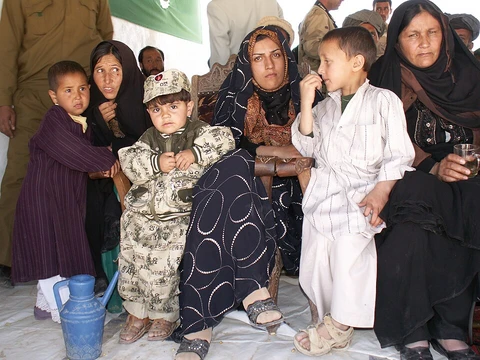
Naming ceremony
A cross-cultural rite officially assigning a name to a person.

A naming ceremony is a stage at which a person or persons is officially assigned a name. The methods of the practice differ over cultures and religions. The timing at which a name is assigned can vary from some days after birth to several months or many years.
- label_1
- Also known as
- value_1
- Christening, Namakarana, Nwaran, Aqiqah, Brit Milah
- label_2
- Common timing
- value_2
- From 6 days to 28 days after birth, or later
- label_3
- Religions involved
- value_3
- Christianity, Hinduism, Islam, Judaism, Humanism
- label_4
- Key figure (earliest recorded humanist)
- label_5
- Purpose
- value_5
- Official assignment of a name and welcome into community
Lore & Background
In Christianity, naming is often part of baptism, called christening, especially in Catholic and some Protestant traditions. Eastern Orthodox infants are named on the eighth day. In the Church of Jesus Christ of Latter-day Saints, a name and blessing occur on the first Sunday after birth. In Kerala, Christian families may follow the Hindu custom of tying an aranjanam.
Reader's Guide
In Hinduism, the Namakarana Samskara is typically on the twelfth day after birth, though in Kerala it is on the 28th day (Noolukettu). In Nepal, the Nwaran is on the eleventh day. The name is chosen according to the lunar horoscope and may be reserved for religious use. The ceremony involves a priest, sacred fire, and the whispering of the name by a relative. In Maharashtra, the paternal aunt names the child. For adult converts, a Yajna is performed and the new name is written in rice. In Islam, the baby is named on the seventh day, with Aqiqah involving sheep sacrifice. In Judaism, boys are named at brit milah on the eighth day; girls within two weeks, often at a Torah reading.
Did You Know?
- In Kerala, Christian families sometimes follow the Hindu custom of tying an aranjanam around the baby's waist.
- In Hinduism, the Chhathi Ceremony is performed when the baby is six days old, late at night, for the goddess Vidhata to write the child's destiny.
- In Turkish Islamic tradition, the paternal grandfather whispers the adhan into the baby's right ear and repeats the chosen name three times.
More in Marriage And Kinship 1-18
Spotted an error? Know more?
This is a living reference — every entry is fact-audited, and reader corrections feed straight into our audit queue. Suggest an edit · See this site's audit record