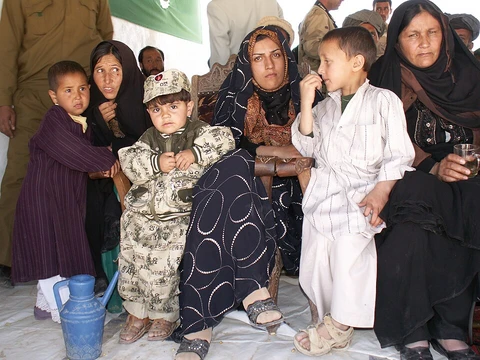
Dowry
A marriage payment from the bride's family to the groom's family.

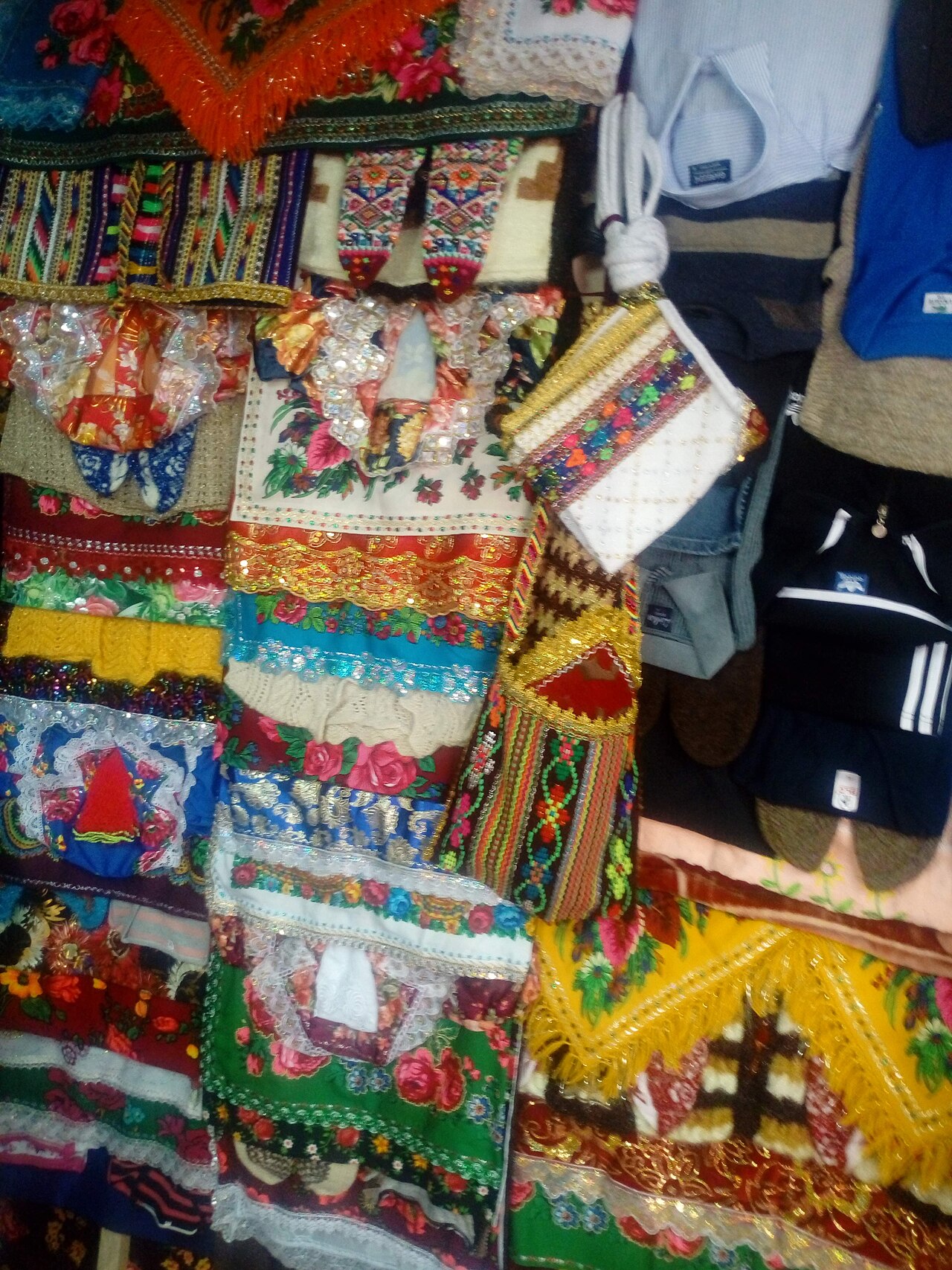
Wikimedia Commons · CC BY 4.0
A dowry, also known as a marriage portion, is a payment of land, property, money, livestock, or a commercial asset made by the bride's family to the groom or his family at the time of marriage. This custom contrasts with bride price, which is a payment from the groom's family to the bride's family, and dower, which is property settled on the bride herself by the groom. Dowry is an ancient practice mentioned in some of the earliest writings and continues to be expected in parts of Asia and other regions, particularly in strongly patrilineal cultures with patrilocal residence.
- definition
- Transfer of parental property to a daughter at her marriage (inter vivos) rather than at death (mortis causa)
- contrasts_with
- Bride price (payment by groom to bride's family) and dower (property settled on bride by groom)
- common_regions
- Europe, South Asia, Africa, and other parts of the world; mainly parts of Asia
- cultural_association
- Strongly patrilineal cultures with patrilocality
- local_names
- Jahez (Urdu), dahej (Hindi), çeyiz (Turkish), jiazhuang (Mandarin), varadhachanai (Tamil), among others
Lore & Background
Anthropologist Jack Goody's comparative study using the Ethnographic Atlas found that dowry is a form of inheritance in Eurasian societies practicing 'diverging devolution,' transmitting property to children regardless of sex. This contrasts with many Sub-Saharan African societies that practice 'homogenous inheritance' and bride price. Goody correlated dowry with intensive plough agriculture and monogamy, while bride price was linked to extensive hoe agriculture and polygamy. However, scholars like Sylvia Yanagisako argue that societies such as parts of Japan, Southern Italy, and China do not support Goody's claim that dowry is a form of female inheritance of male property, while Susan Mann offers counterexamples from late Imperial China.
Reader's Guide
The dowry system has deep historical roots, appearing in the Code of Hammurabi in ancient Babylon, where daughters did not inherit but received a dowry for lifetime security. In ancient Greece, dowries (pherné) became common by the classical period, and in Rome, the dowry (dos) was a widespread institution. The significance of dowry lies in its role as a conjugal fund providing financial security for the wife and children, though its nature varies widely. In some contexts, such as North India, dowry partially goes to the groom's joint family, which later returns to the couple upon partition. The custom remains controversial and continues to be demanded in some parts of the world, reflecting deep-seated social and economic structures.
Did You Know?
- Dowry is mentioned in the Code of Hammurabi as an already-existing custom.
- In Babylonia, both bride price and dowry auctions were practiced, with auctions of maidens held annually according to Herodotus.
- In ancient Greece, property brought by the wife beyond the dowry was called 'parapherna,' the root of the word 'paraphernalia.'
Defining the Transfer: Dowry, Bride Price, and Dower
A dowry, also called a marriage portion, represents a specific direction of wealth flow at the moment of marriage: assets such as land, livestock, money, or commercial property move from the bride's family toward the groom or his household. This directional distinction is what separates dowry from two closely related institutions. Bride price, or bride service, flows in the opposite direction, from the groom's side to the bride's family. Dower, meanwhile, is property the groom settles directly on the bride herself, remaining under her personal ownership and control throughout her life. In legal and anthropological terms, a dowry is an inter vivos transfer—parental property passed to a daughter at her wedding rather than at the parent's death. The resulting conjugal fund can serve multiple purposes: it may safeguard a woman against widowhood or a negligent spouse, eventually support her children, or furnish the new marital household with linens, furniture, and other necessities. The practice carries a rich vocabulary across cultures—jahez in Urdu, dahej in Hindi, jiazhuang in Mandarin, streedhanam in Malayalam, serotwana in parts of Africa—reflecting how deeply embedded the concept is in local social life.
Agriculture, Inheritance, and the Birth of Dowry
Anthropologist Jack Goody, drawing on the Ethnographic Atlas, proposed that dowry functions as a form of female inheritance within the broad Eurasian band stretching from Japan to Ireland. These societies practice what he called diverging devolution, meaning property passes to children of both sexes. This stands in contrast to the majority of Sub-Saharan African societies, which follow homogeneous inheritance, transmitting property only to same-sex children and typically employing bride price instead. Goody linked these patterns to agricultural systems: dowry correlates with intensive plough agriculture, where farming is predominantly male labor, private property is central, and marriage tends toward monogamy to keep assets within the nuclear family. Bride price, by contrast, aligns with extensive shifting horticulture in sparsely populated regions where women perform most of the agricultural work, polygamy is common, and the payment compensates the bride's family for losing her labor. Building on Ester Boserup's research on sexual division of labor, Goody argued that the type of farming fundamentally shapes the type of marriage transaction a society develops.
The Scholarly Debate and Regional Nuances
Goody's model has drawn both endorsement and serious challenge. Sylvia Yanagisako identified societies in parts of Japan, Southern Italy, and China where dowry does not cleanly map onto female inheritance of male property, cautioning that Goody's framework functions as an evolutionary model whose historical variables may no longer be decisive. Susan Mann countered with evidence from late Imperial China showing dowry did operate as female inheritance. Stanley J. Tambiah, studying North India, found the thesis broadly sound but needing local adjustment: a large share of the dowry flows into the groom's joint family rather than directly to the bride's conjugal fund. Yet when that joint family partitions after the parents' deaths, the wealth divides among married sons, meaning the dowry ultimately returns to the bride and her husband as their shared fund—preserving Goody's logic through a longer circuit. Schlegel and Eloul added a further variable, arguing that the type of property a household controls is a major determinant: dowry concentrates property and characterizes property-owning, commercial, or landed pastoral classes, while bridewealth circulates property and women in societies where such assets remain scarce.
Ancient Roots and a Living Custom
The Code of Hammurabi, one of the oldest surviving legal documents from ancient Babylon, already treats dowry as an established practice, indicating the custom predates even the earliest written records. In that Babylonian context, daughters did not normally inherit a share of their father's estate; instead, at marriage they received a dowry from their parents intended to provide the greatest lifetime security the family could afford. Both bride price and dowry auctions were practiced in Babylon, though the bride price almost always became incorporated into the dowry itself. The custom's geographic reach is remarkably wide, with long histories documented across Europe, South Asia, and Africa. Today, dowry continues to be expected and demanded as a condition for accepting a marriage proposal in various parts of the world, particularly across Asia. The practice is most prevalent in strongly patrilineal cultures that expect women to live with or near their husband's family, a pattern known as patrilocality. The sheer number of local names for the concept—jahez, dahej, jiazhuang, varadhachanai, khatnam, streedhanam, serotwana, idana, saduquat, mugtaf—testifies to how deeply the institution is woven into the social and linguistic fabric of the communities that maintain it.
Gallery


Frequently Asked Questions
What is Dowry in Marriage And Kinship 1-18?
Entry 1-18 defines Dowry as a transfer of assets—land, money, livestock, or other property—from a bride's family to the groom or his household at the time of the wedding. It is classified as an inter vivos gift, meaning it is made during the parents' lifetime rather than as a posthumous inheritance.
How does Dowry differ from Bride Price and Dower?
Bride Price is the reverse flow, with the groom's family paying the bride's family, while Dower is property the groom settles on the bride herself. Dowry is the only one of the three mechanisms that moves wealth from the bride's side to the groom's side.
Where is Dowry still commonly expected today?
The entry notes the practice persists across parts of South Asia, other Asian regions, as well as areas of Europe and Africa. It is especially prevalent in strongly patrilineal societies where the couple takes up residence with the groom's family after the wedding.
What local names for Dowry does the encyclopedia list?
The entry cites Jahez (Urdu), dahej (Hindi), çeyiz (Turkish), jiazhuang (Mandarin), and varadhachanai (Tamil) among the regional terms. These reflect how the same underlying custom is named differently across linguistic and cultural contexts.
Why is Dowry culturally significant in patrilineal systems?
Because lineage and residence follow the father's side, the bride's parents use the dowry transfer to give their daughter material security as she enters a new household. It effectively redistributes parental wealth to a daughter at the moment of marriage rather than waiting until the parents pass away.
More in Marriage And Kinship 1-18
Spotted an error? Know more?
This is a living reference — every entry is fact-audited, and reader corrections feed straight into our audit queue. Suggest an edit · See this site's audit record