Interracial marriage
Marriage between spouses of different races or ethnicities.

Rcragun · Public domain
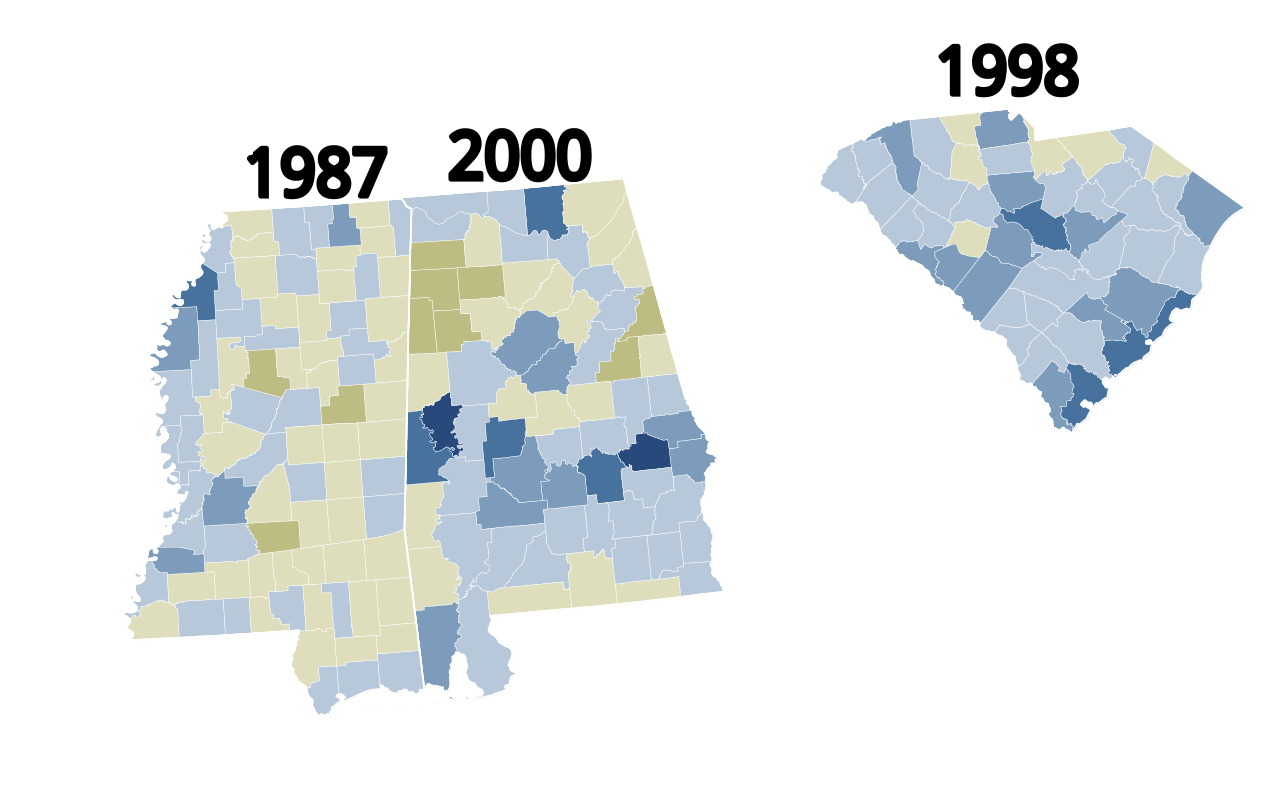
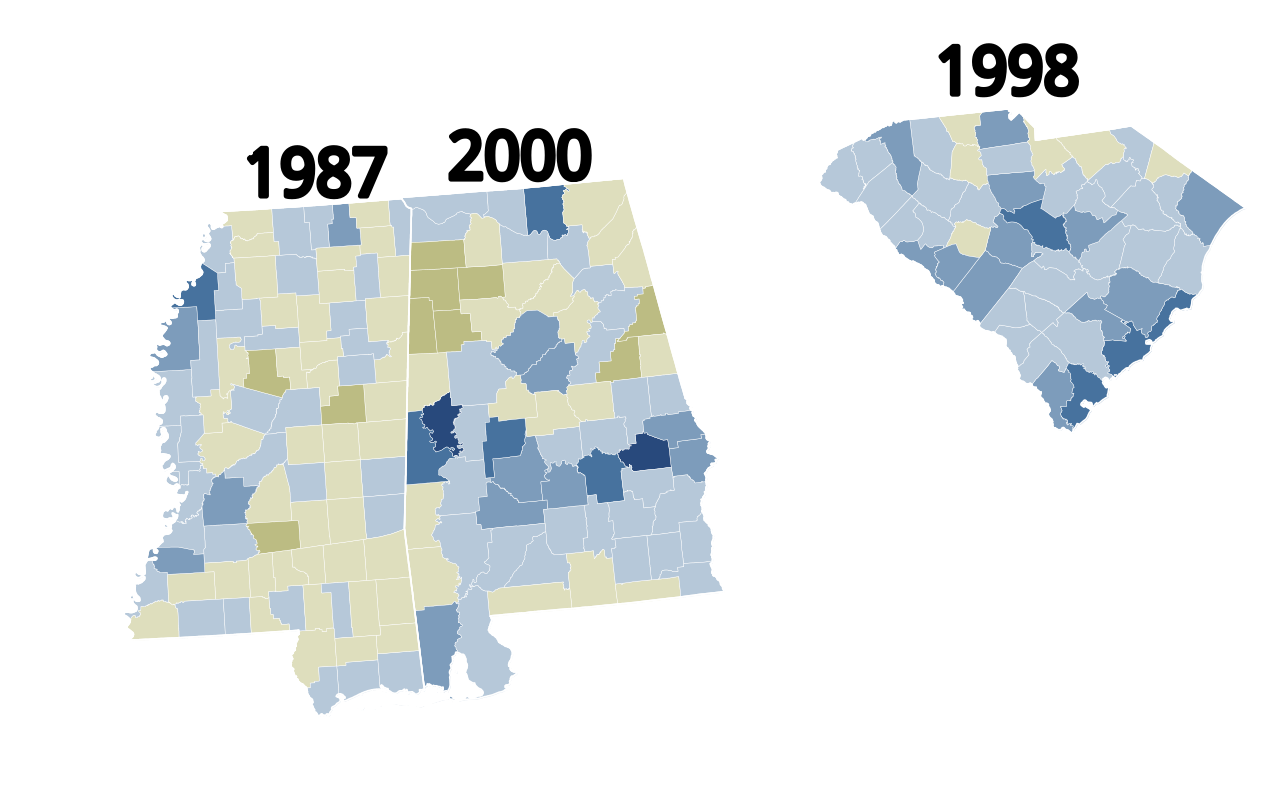
Interracial marriage is a marriage involving spouses who belong to different races or racialized ethnicities. In the past, such marriages were outlawed in certain U.S. In 1960, interracial marriage was forbidden by law in 31 U.S. states.
- U.S. states banning in 1960
- 31
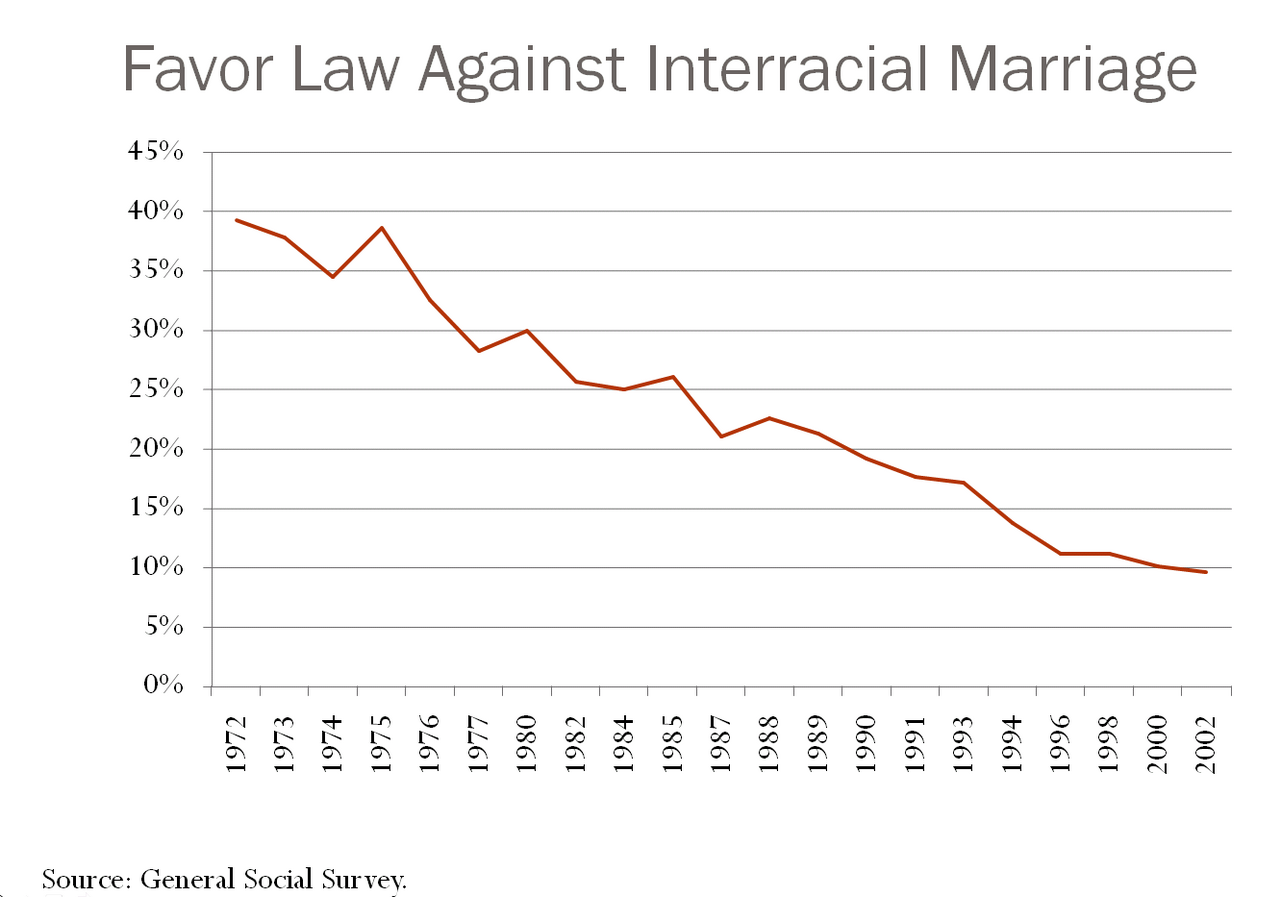
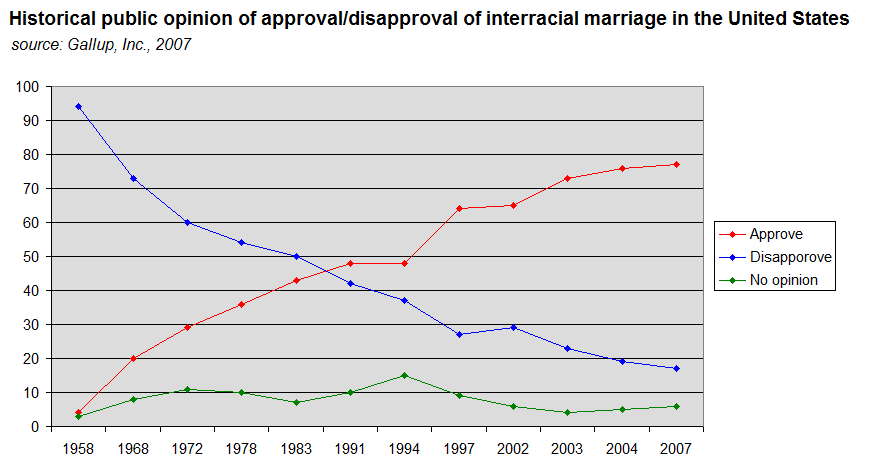
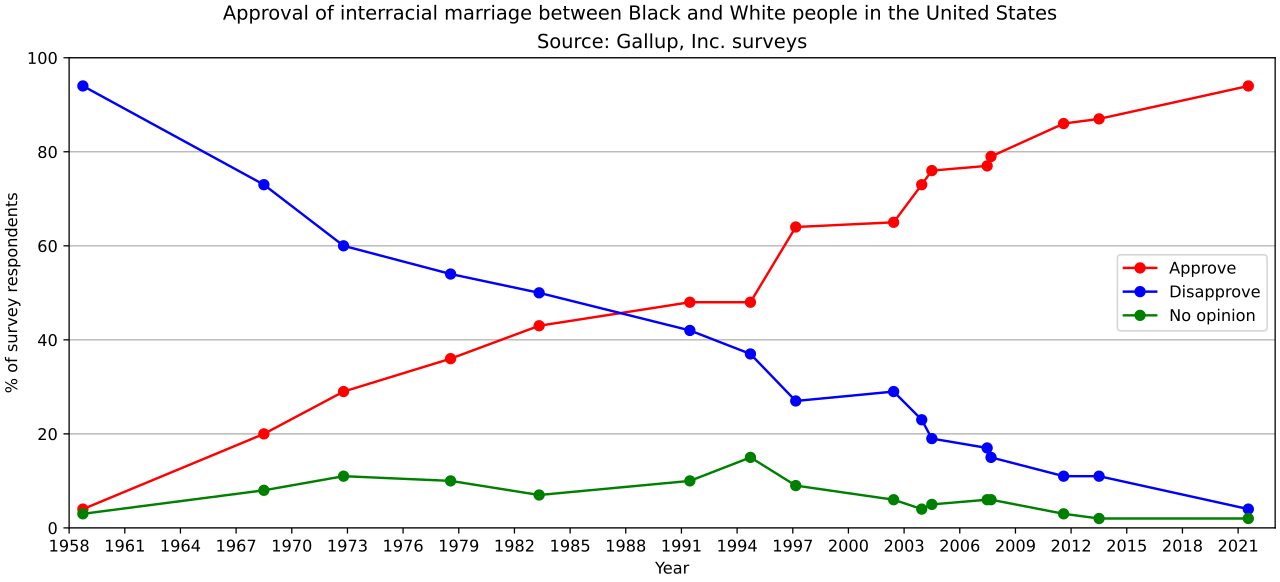
- U.S. disapproval in 1958
- 94%
- U.S. disapproval in 2013
- 11%
- U.S. approval in 2021
- 94%
Lore & Background
Despite this, it was not legalized in all U.S. Virginia. The UDHR is not legally binding and thus not necessarily reflective of global policies. Former president Harry S.
Reader's Guide
Interracial marriage has been a subject of legal prohibition, social controversy, and scholarly study. Historically outlawed in several jurisdictions, its legality in the U.S. Studies indicate that interracial couples, particularly those involving a white woman, face higher divorce risks, possibly due to reduced family support and increased discrimination. However, interracial marriages also offer benefits, such as fostering positive interracial encounters that reduce prejudice, both directly and vicariously. Multiracial children may face identity challenges and discrimination from multiple groups, yet some report benefits from identity fluidity. The topic remains complex, with ongoing debates about attractiveness, divorce risk, and social acceptance.
Did You Know?
- In 1960, interracial marriage was forbidden by law in 31 U.S. states.
- Interracial marriages involving a white woman have a higher risk of divorce, while those involving black women show a decreased risk.
Global Reach and the Spectrum of Cultural Attitudes
Cousin marriage—defined as a union between individuals who share common grandparents or other fairly recent ancestors—remains a widespread phenomenon across the globe. More than ten percent of all marriages worldwide involve first or second cousins, a figure that underscores just how deeply embedded this practice is in human social organization. The historical record shows that Aboriginal peoples across Australia, the Americas, Polynesia, and Melanesia all engaged in such unions, indicating that the pattern predates any single civilization. Today, cultural responses to the practice form a broad spectrum. In certain communities, marrying a cousin is not merely tolerated but actively encouraged and expected, treated as the ideal form of partnership. At the opposite extreme, other societies classify the union as a form of incest, attaching heavy social stigma and taboo to those who pursue it. A third group of societies occupies a middle ground, neither promoting nor condemning the arrangement, though it rarely represents the default expectation. Because of this diversity, cousin marriage has become a central subject of study in anthropology and alliance theory, offering researchers a window into how different cultures construct kinship, obligation, and social cohesion.
A Patchwork of Legal Prohibitions
The legal treatment of cousin marriage varies dramatically from one jurisdiction to the next, creating a complex global mosaic of permission and restriction. In China, North Korea, South Korea, and the Philippines, unions between first cousins are outright forbidden. Among Hindus in certain Indian jurisdictions, in several Balkan nations, in Belgium, and in Lithuania, similar bans are in effect. In the United States, thirty of the fifty states prohibit first-cousin marriage, and eight states go further by criminalizing the act entirely—making them, according to available records, the only jurisdictions anywhere in the world to impose criminal penalties for such a union. Many legal codes specify the precise degree of consanguinity that is barred, drawing lines between which levels of shared ancestry are acceptable and which are not. The debate surrounding these restrictions is deeply polarized. Those who support the right to marry a cousin in places where it is banned often frame the prohibition as a form of discrimination against particular cultural or religious groups. Opponents, by contrast, tend to invoke moral reasoning or other normative arguments to defend the restrictions. In 1981, the government of the People's Republic of China enacted a formal legal ban on first-cousin marriage, citing potential health concerns as its primary justification.
China's Layered Kinship Logic
Chinese attitudes toward cousin marriage are shaped by a sophisticated system of kinship terminology and patrilineal logic that stretches back millennia. Confucius himself framed marriage as the joining of two different surnames, a principle that shaped which cousin relationships were permissible. In the ancient Erya lexicon dating to roughly the third century BC, the terms for different types of cross-cousins were already distinguished, and over the following centuries the vocabulary continued to evolve. By the third century AD, marriage to a mother's sister's children had become acceptable, and eventually the language consolidated so that maternal-side cousins fell under one category while paternal-side cousins retained a separate one—a distinction that persists in modern Chinese, where biǎo cousins are considered outside and táng cousins belong to the same house. Anthropologist Francis L. K. Hsu identified the mother's brother's daughter as the most preferred cousin marriage partner in Chinese tradition, while a father's brother's daughter was regarded as nearly incestuous because both parties would share a surname. The Ming dynasty legally banned all cousin marriage, but enforcement proved inconsistent, and by the Qing era the practice had resurged, particularly in rural areas. The poet Bai Juyi even described a village where two clans had intermarried for many generations.
Genetics, Historical Shifts, and Enduring Motivations
The question of genetic risk sits at the heart of much modern debate over cousin marriage. Children born to first-cousin parents carry a four to six percent chance of autosomal recessive genetic disorders, compared with roughly three percent for children of entirely unrelated parents—a modest but measurable increase. Interestingly, a study covering Iceland between 1800 and 1965 found that marriages between third or fourth cousins actually produced more children and grandchildren than marriages at other degrees of separation, suggesting that very distant cousin unions may not carry the same reproductive concerns. In Western countries, the prevalence of first-cousin marriage has steadily declined since the late nineteenth and early twentieth centuries. Yet in the Middle East and much of the Indian Subcontinent—excluding India and Nepal—cousin marriage remains strongly favored. The practice has persisted for all recorded history across the Middle East, and anthropologists continue to debate whether it constitutes the defining feature of the region's kinship system or simply varies sharply by community. The motivations behind the practice are practical and cultural: preserving family wealth, maintaining geographic proximity, keeping traditions alive, strengthening ties between spouses and in-laws, and safeguarding cultural values. Many of these unions are arranged, reflecting broader patterns of family-mediated marriage found across South Asia, the Middle East, and parts of East Asia.
Gallery

Frequently Asked Questions
What exactly is Interracial marriage?
Interracial marriage refers to a legal union between two spouses who identify as belonging to different races or racialized ethnic groups. It is a recognized category of kinship that has carried significant legal and social weight, particularly in the United States.
How many U.S. states still banned interracial marriage as of 1960?
In 1960, thirty-one U.S. states had laws on the books that explicitly prohibited marriages between people of different races. This made such unions illegal in nearly a third of the country at that time.
How has American public opinion on interracial marriage changed over the decades?
In 1958, roughly 94 percent of Americans disapproved of such marriages, but by 2013 that disapproval had dropped to just 11 percent. By 2021, approval had climbed back up to 94 percent, reflecting a near-complete reversal in public sentiment over about sixty years.
Why is Interracial marriage considered a landmark topic in marriage and kinship studies?
It sits at the intersection of law, civil rights, and family structure, because the legal bans and their eventual dismantling reshaped who was permitted to form a family in the U.S. Its history is a primary case study in how kinship rules evolve alongside social attitudes.
What is the current legal and social status of Interracial marriage in the U.S.?
All state-level bans have been struck down, and the practice is fully legal nationwide. With 94 percent approval recorded in 2021, it now enjoys broad social acceptance and no longer faces the legal barriers that defined its earlier history.
More in Marriage And Kinship 1-18
Spotted an error? Know more?
This is a living reference — every entry is fact-audited, and reader corrections feed straight into our audit queue. Suggest an edit · See this site's audit record